
Military Base Closures Could Hit Economy
FEB. 28, 2012
By KATY GRIMES
California’s economy is in the tank. That is old news. While there doesn’t seem to be relief on the horizon, there is now talk about military base closures. And as with any large employer planning on leaving the state or closing, the economic impacts to the state could be devastating.
When a military base closes, the ripple effect throughout areas can be negative, as homes are left vacant, businesses feel the impact and lose customers, and employees lose jobs.
However, some business analysts say that in an economically thriving region, a base closure “can be an adrenalin shot to the local economy as hundreds of acres of land are suddenly made available for municipal growth and expansion,” a 2010 Daily Finance story reported. But for rural and suburban areas, “closure can translate into years of struggle, as municipal planners strain to fill the awkward, expansive vacant space that the military leaves behind.”
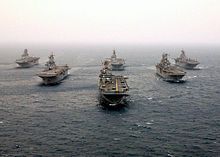
Through the Federal Base Realignment and Closure Commission, U.S. Department of Defense Secretary Leon Panetta recently announced plans to ask Congress to approve two rounds of military base closures, starting in 2013 and with a second round in 2015.
Concerned about this threat, Sen. Tony Strickland, R-Moorpark, has introduced Senate Joint Resolution 19, to encourage the California congressional delegation to help keep California’s military bases open as the U.S. Department of Defense goes forward with the base closures.
Strickland also is running for the U.S. Congress in the 26th Congressional District.
“With Port Hueneme and Point Mugu proving to be an invaluable asset to the local community, I plan to fight to keep these bases open,” Strickland said in a news release. “Ventura County military bases are a great economic impact to our local economy — providing almost 19,000 much-needed jobs — as well as helping to ensure our national security.”
Largest Employer

According to a study by the Naval Base Ventura County, and the Workforce Investment Board of Ventura County, the Naval Bases in Ventura County have been the largest employer in the county. “When Department of Defense jobs are included, the base supports about 4.6 percent of all jobs in Ventura County,” the report found.
The report is from 2006, but Strickland’s office explained the current numbers, according to the Navy, are similar. “In 2006, the base produced more than an estimated $1.2 billion in goods and services that flowed into the county and other regions of the U.S. and the world. Of that total, almost $950 million in spending was retained locally. This spending supported about 8,216 jobs in the region, with the estimated labor income associated with these job $377 million.”
In a summary of naval base estimated economic impacts to just the Ventura County Economy:
* Total Value of Goods & Services is $1,225.9 million;
* Output Retained in Ventura County $949.3 million;
* Labor Income $377.7 million;
* State & Local Tax Receipts $69.2 million;
* Aid to Schools$1 million;
* Jobs 8,216.
Task Force
Strickland sent a letter to Gov. Jerry Brown asking him to authorize the creation of an unpaid, volunteer task force for the strategic purpose of preserving California’s military bases. Similar task forces had been authorized — one in 1993 by Gov. Pete Wilson and another in 2004 by Gov. Arnold Schwarzenegger. However, these task forces have since expired.
According to the naval base, there are more than 19,000 military and civilian employees who are stationed or work for the base.
The base covers more than 6,000 acres in Ventura County.
Port Hueneme features a deepwater port and 16 miles of rail line.
Point Mugu can accommodate the largest military aircraft.
The 13,370-acre San Nicolas Island, and the 36,000 square mile Sea Test Range, are also part of the base.
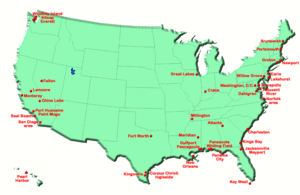
According to the 2010 U.S. Census, Ventura County has 823,318 residents. Adding nearly 20,000 out-of-work people to the already 9.4 percent unemployment rate in Ventura County would be devastating to the county.
“Military bases across the state benefit all the people of California, so we need to send a message to Congress to let them know just how important California’s military bases are,” Strickland added. “It’s my hope that Congress does not move forward with President Obama’s proposal to cut funding for national security.”
For more information, here are two different perspectives on base closures:
Related Articles

Senate Staff Salaries Online!
Anthony Pignataro: Exciting, isn’t it? Well, to us wonkish, nerdish reporters, it is. Yes, folks, Senate President Pro Tem Darrell
Steve Maviglio, pension sage: Why it’s a laughable spectacle
April 2, 2013 By Chris Reed Steve Maviglio, a leading consigliere to top Sacramento Democrats for more than a decade,

School bond problems go far beyond LAUSD purchase of iPads
Gov. Jerry Brown’s skepticism about state assistance for local school districts’ construction projects appears to be primarily based on an
